
Publications
Implicit Incompressible Porous Flow using SPH

We present a novel implicit porous flow solver using SPH, which maintains fluid incompressibility and is able to model a wide range of scenarios, driven by strongly coupled solid-fluid interaction forces. Many previous SPH porous flow methods reduce particle volumes as they transition across the solid-fluid interface, resulting in significant stability issues. We instead allow fluid and solid to overlap by deriving a new density estimation. This further allows us to extend SPH pressure solvers to take local porosity into account and results in strict enforcement of incompressibility. As a result, we can simulate porous flow using physically consistent pressure forces between fluid and solid. In contrast to previous SPH porous flow methods, which use explicit forces for internal fluid flow, we employ implicit non-pressure forces. These we solve as a linear system and strongly couple with fluid viscosity and solid elasticity. We capture the most common effects observed in porous flow, namely drag, buoyancy and capillary action due to adhesion. To achieve elastic behavior change based on local fluid saturation, such as bloating or softening, we propose an extension to the elasticity model. We demonstrate the efficacy of our model with various simulations that showcase the different aspects of porous flow behavior. To summarize, our system of strongly coupled non-pressure forces and enforced incompressibility across overlapping phases allows us to naturally model and stably simulate complex porous interactions.
» Show BibTeX
@article{BWJB25,
title = {Implicit {{Incompressible Porous Flow}} Using {{SPH}}},
author = {B{\"o}ttcher, Timna and Westhofen, Lukas and Jeske, Stefan Rhys and Bender, Jan},
year = 2025,
month = dec,
journal = {ACM Transactions on Graphics},
volume = {44},
number = {6},
doi = {10.1145/3763325}
}
Adaptive Phase-Field-FLIP for Very Large Scale Two-Phase Fluid Simulation

Capturing the visually compelling features of large-scale water phenomena,such as the spray clouds of crashing waves, stormy seas, or waterfalls, involves simulating not only the water but also the motion of the air interacting with it. However, current solutions in the visual effects industry still largely rely on single-phase solvers and non-physical “white-water” heuristics. To address these limitations, we present Phase-Field-FLIP (PF-FLIP), a hybrid Eulerian/Lagrangian method for the fully physics-based simulation of very large-scale, highly turbulent multiphase flows at high Reynolds numbers and high fluid density contrasts. PF-FLIP transports mass and momentum in a consistent, non-dissipative manner and, unlike most existing multiphase approaches, does not require a surface reconstruction step. Furthermore, we employ spatial adaptivity across all critical components of the simulation algorithm, including the pressure Poisson solver. We augment PF-FLIP with a dual multiresolution scheme that couples an efficient treeless adaptive grid with adaptive particles, along with a fast adaptive Poisson solver tailored for high-density-contrast multiphase flows. Our method enables the simulation of two-phase flow scenarios with a level of physical realism and detail previously unattainable in graphics, supporting billions of particles and adaptive 3D resolutions with thousands of grid cells per dimension on a single workstation.
» Show BibTeX
@article{BBT25,
author = {Braun, Bernhard and Bender, Jan and Thuerey, Nils},
title = {Adaptive Phase-Field-FLIP for Very Large Scale Two-Phase Fluid Simulation},
year = {2025},
publisher = {Association for Computing Machinery},
volume = {44},
number = {4},
url = {https://doi.org/10.1145/3730854},
doi = {10.1145/3730854},
journal = {ACM Trans. Graph.},
month = jul,
articleno = {42},
numpages = {23},
keywords = {turbulent flows, large density ratio, two-phase flows, FLIP, spatial adaptivity, large-scale fluid simulation}
}
SymX: Energy-based Simulation from Symbolic Expressions

Optimization time integrators are effective at solving complex multi-physics problems including deformable solids with non-linear material models, contact with friction, strain limiting, etc. For challenging problems, Newton-type optimizers are often used, which necessitates first- and second-order derivatives of the global non-linear objective function. Manually differentiating, implementing, testing, optimizing, and maintaining the resulting code is extremely time-consuming, error-prone, and precludes quick changes to the model, even when using tools that assist with parts of such pipeline.
We present SymX, an open source framework that computes the required derivatives of the different energy contributions by symbolic differentiation, generates optimized code, compiles it on-the-fly, and performs the global assembly. The user only has to provide the symbolic expression of each energy for a single representative element in its corresponding discretization and our system will determine the assembled derivatives for the whole simulation. We demonstrate the versatility of SymX in complex simulations featuring different non-linear materials, high-order finite elements, rigid body systems, adaptive discretizations, frictional contact, and coupling of multiple interacting physical systems.
SymX’s derivatives offer performance on par with SymPy, an established off-the-shelf symbolic engine, and produces simulations at least one order of magnitude faster than TinyAD, an alternative state-of-the-art integral solution.
» Show BibTeX
@Article{FLW25,
author = {Fern\'{a}ndez-Fern\'{a}ndez, Jos\'{e} Antonio and L\"{o}schner, Fabian and Westhofen, Lukas and Longva, Andreas and Bender, Jan},
title = {SymX: Energy-based Simulation from Symbolic Expressions},
year = {2025},
issue_date = {February 2026},
publisher = {Association for Computing Machinery},
address = {New York, NY, USA},
volume = {45},
number = {1},
issn = {0730-0301},
url = {https://doi.org/10.1145/3764928},
doi = {10.1145/3764928},
journal = {ACM Trans. Graph.},
month = oct,
articleno = {5},
numpages = {19},
keywords = {Physically-based simulation, symbolic differentiation, optimization time integration}
}
Interactive Facial Animation: Enhancing Facial Rigs With Real-Time Shell And Contact Simulation
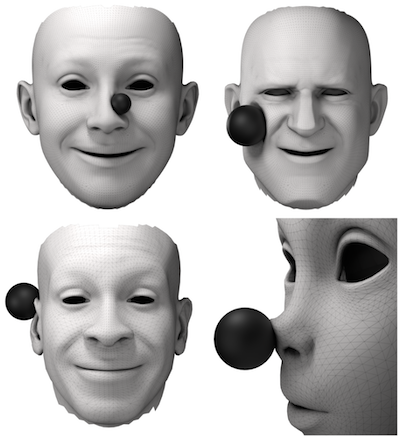
Demand for high-quality virtual 3D characters continues to grow in both entertainment and communication, and with it, the desire for interactive avatars. This presents unique challenges for high-fidelity interactive solutions that must be quick to set up, efficient to run in real-time on consumer hardware, and work well, not only on human characters, but also on fantastical and heavily stylized ones. We present Interactive Facial Animation (IFA), a novel approach to augment facial animation rigs with shell simulation and contact without requiring anatomical priors or artist intervention. Our method uses an efficient shell model that tracks the output of a face rig in real-time and incorporates realistic contact. By designing our shell model to be differentiable, we can use inverse simulation to reconstruct realistic non-uniform stiffness that captures both stiff (ears, nose) and soft (cheeks, lips) areas, based on the rig’s deformation space. The reconstruction process imposes hard limits on acceptable errors, which ensures that IFA preserves the resolution and expressiveness of the source material, a common shortcoming in many face simulation pipelines. With performance in mind, we demonstrate IFA using a variant of the Fast Mass-Springs method. However, the presented concept can be realized with any differentiable physics solver that provides reliable convergence. We showcase our method in four different character rigs, achieving simulation update runtimes between 0.39 and 1.27 milliseconds (787-2564 FPS) on a single CPU thread. Unlike existing methods that require lengthy preparation times, our pipeline can be ready to use within minutes, also on the CPU.
» Show BibTeX
@article{fernandez-fernandezInteractiveFacialAnimation2025,
title = {Interactive {{Facial Animation}}: {{Enhancing Facial Rigs With Real-Time Shell And Contact Simulation}}},
author = {{Fern{\'a}ndez-Fern{\'a}ndez}, Jos{\'e} Antonio and Goldade, Ryan and Kavan, Ladislav and Bender, Jan and Herholz, Philipp},
year = {2025},
journal = {Proceedings of the ACM on Computer Graphics and Interactive Techniques},
}
Multiphysics Simulation Methods in Computer Graphics
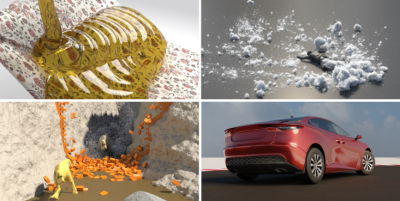
Physics simulation is a cornerstone of many computer graphics applications, ranging from video games and virtual reality to visual effects and computational design. The number of techniques for physically-based modeling and animation has thus skyrocketed over the past few decades, facilitating the simulation of a wide variety of materials and physical phenomena. This report captures the state-of-the-art of multiphysics simulation for computer graphics applications. Although a lot of work has focused on simulating individual phenomena, here we put an emphasis on methods developed by the computer graphics community for simulating various physical phenomena and materials, as well as the interactions between them. These include combinations of discretization schemes, mathematical modeling frameworks, and coupling techniques. For the most commonly used methods we provide an overview of the state-of-the-art and deliver valuable insights into the various approaches. A selection of software frameworks that offer out-of-the-box multiphysics modeling capabilities is also presented. Finally, we touch on emerging trends in physics-based animation that affect multiphysics simulation, including machine learning-based methods which have become increasingly popular in recent years.
@article{HJL*25,
journal = {Computer Graphics Forum},
title = {{Multiphysics Simulation Methods in Computer Graphics}},
author = {Holz, Daniel and Jeske, Stefan Rhys and L\"oschner, Fabian and Bender, Jan and Yang, Yin and Andrews, Sheldon},
year = {2025},
publisher = {The Eurographics Association and John Wiley & Sons Ltd.},
ISSN = {1467-8659},
DOI = {10.1111/cgf.70082},
volume = {44},
number = {2}
}
Solution Approaches for the Efficient Modelling of the Layer Build-Up in the WAAM Manufacturing
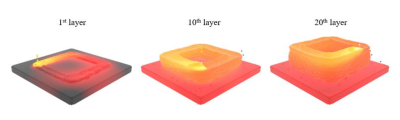
Within Additive Manufacturing (AM) technologies, Wire Arc Additive Manufacturing (WAAM) stands out as a particularly promising process variant. WAAM enables the efficient production of large metal structures and offers significant advantages over traditional processes, especially in the field of repair welding.
A key component for optimizing the WAAM process is simulation, particularly in relation to the concept of a virtual factory. A digital twin could significantly accelerate the wire-and-arc-based AM manufacturing process, especially regarding development, optimization, and certification.
Developing a precise simulation model is crucial to correctly map a weld's geometric shape. In the presented work, Smoothed Particle Hydrodynamics (SPH) is used to develop a model that simulates multiple weld beads building on each other – an area that is not yet fully established due to complex physical interactions and the enormous computing resources required.
The focus of the work is on heat and mass transfer during the WAAM process, aiming to create a model that calculates interactions within a geometry of numerous layer structures while significantly reducing calculation time. The proposed approach fully accounts for mass and heat transfer in the cathode area, while droplet formation and detachment are captured by an equivalent model for more efficient use of computing resources.
The concept for accelerated calculation incorporates a coarse mass discretization and the neglect of a direct resolution of the anode area. Accordingly, the model focuses on the processes in the cathode area concerningt the weld to be formed. A side effect of this concept are local deviations in the weld geometry arising from surface tension models in the SPH formalism, affecting global component geometry.
The potential of the model for predicting the temperature field could be demonstrated in the simulative reproduction of an eccentric pin as an industrial reference product. However, there is still no satisfactory agreement between the calculated geometry and the real component. While geometric agreement requires further calibration, the temperature field prediction shows strong consistency with the industrial process. Calculation time still holds potential for improvement.
This work makes a significant contribution to the further development of simulation methods in the field of WAAM and provides valuable information for improving process control and increasing efficiency.
@InProceedings{MWW+25,
author = {Mokrov, Oleg and Warkentin, Sergej and Westhofen, Lukas and Antonissen, Joachim and Bender, Jan Stephen and Sharma, Rahul and Reisgen, Uwe},
title = {{S}olution {A}pproaches for the {E}fficient {M}odelling of the {L}ayer {B}uild-{U}p in the {WAAM} {M}anufacturing},
booktitle = {[Mathematical Modelling of Weld Phenomena 14, 2025-09-21 - 2025-09-24, Graz, Austria]},
year = {2025},
pages = {301-312},
month = {Sep},
organization = {Mathematical Modelling of Weld Phenomena 14, Graz (Austria), 21 Sep 2025 - 24 Sep 2025},
publisher = {Verlag der Technischen Universität Graz},
date = {2025-09-21},
doi = {https://doi.org/10.3217/978-3-99161-089-2-014},
}
Enhancing GMAW simulations through a hybrid Eulerian and Lagrangian method considering an inclined welding torch

The comprehensive simulation of gas metal arc welding (GMAW) remains challenging due to the continuously evolving topologies of both the welding arc region and the weld seam formation zone. GMAW involves phenomena, such as melting, hydrodynamic flows within the weld pool, and crystallization, occurring on timescales significantly distinct from the rapid plasma physics processes in the arc. This plasma exhibits pronounced heterogeneity in voltage gradients, necessitating highly precise modeling of anode and cathode layers. In contrast, traditional simulation methods couple liquid metal and arc behaviour within a single domain, typically employing Volume of Fluid (VOF) or Level Set techniques. These methods often rely on substantial simplifications in the plasma boundary layers, thereby compromising predictive accuracy. To overcome these limitations, this paper presents a hybrid modeling approach coupling a Lagrangian Smoothed Particle Hydrodynamics (SPH) model for weld pool and droplet dynamics with an Eulerian framework tailored for the arc zone. The SPH method effectively captures large-scale phenomena in the weld pool, including heat and mass transfer, droplet detachment, and solidification. On the other hand, the Eulerian model accurately represents the complex electromagnetic and thermal behaviour within the anode and cathode layers of the arc plasma.
This study also addresses torch inclination effects on weld pool dynamics, heat flux distribution, and current density on the cathode, providing insights into their influence on weld geometry. Through the synthesis of both, Lagrangian and Eulerian approaches, the proposed method provides a robust tool for addressing the multiscale, multiphysics nature of the GMAW process. Results from 3D calculations include quasi-stationary Eulerian solutions for the plasma domain and transient SPH simulation of the heat and mass transfer for a drag/push weld.
Although still under active development, this hybrid model shows significant potential for enhancing the predictive capabilities of GMAW simulations, thus offering additional possibilities in process optimization and quality improvement in industrial welding.
@InProceedings{MWW25,
author = {Mokrov, Oleg and Warkentin, Sergej and Westhofen, Lukas and Bender, Jan Stephen and Sharma, Rahul and Reisgen, Uwe},
title = {Enhancing GMAW Simulations Through a Hybrid Eulerian and Lagrangian Method Considering an Inclined Welding Torch},
booktitle = {Mathematical Modelling of Weld Phenomena},
year = {2025},
volume = {14},
pages = {75-108},
publisher = {Verlag der Technischen Universität Graz},
doi = {https://doi.org/10.3217/978-3-99161-089-2-003},
}
A Smoothed Particle Hydrodynamics framework for fluid simulation in robotics
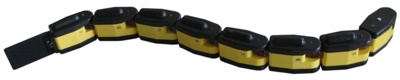
Simulation is a core component of robotics workflows that can shed light on the complex interplay between a physical body, the environment and sensory feedback mechanisms in silico. To this goal several simulation methods, originating in rigid body dynamics and in continuum mechanics have been employed, enabling the simulation of a plethora of phenomena such as rigid/soft body dynamics, fluid dynamics, muscle simulation as well as sensor and actuator dynamics. The physics engines commonly employed in robotics simulation focus on rigid body dynamics, whereas continuum mechanics methods excel on the simulation of phenomena where deformation plays a crucial role, keeping the two fields relatively separate. Here, we propose a shift of paradigm that allows for the accurate simulation of fluids in interaction with rigid bodies within the same robotics simulation framework, based on the continuum mechanics-based Smoothed Particle Hydrodynamics method. The proposed framework is useful for simulations such as swimming robots with complex geometries, robots manipulating fluids and even robots emitting highly viscous materials such as the ones used for 3D printing. Scenarios like swimming on the surface, air-water transitions, locomotion on granular media can be natively simulated within the proposed framework. Firstly, we present the overall architecture of our framework and give examples of a concrete software implementation. We then verify our approach by presenting one of the first of its kind simulation of self-propelled swimming robots with a smooth particle hydrodynamics method and compare our simulations with real experiments. Finally, we propose a new category of simulations that would benefit from this approach and discuss ways that the sim-to-real gap could be further reduced.
@article{AAB+24,
title = {A smoothed particle hydrodynamics framework for fluid simulation in robotics},
journal = {Robotics and Autonomous Systems},
volume = {185},
year = {2025},
issn = {0921-8890},
doi = {https://doi.org/10.1016/j.robot.2024.104885},
url = {https://www.sciencedirect.com/science/article/pii/S0921889024002690},
author = {Emmanouil Angelidis and Jonathan Arreguit and Jan Bender and Patrick Berggold and Ziyuan Liu and Alois Knoll and Alessandro Crespi and Auke J. Ijspeert}
}
Previous Year (2024)
